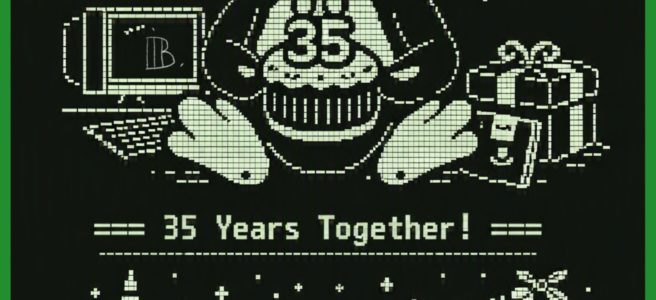
Happy 35-th Birthday Linux: The Operating System That Changed the World — A Story of Linus Torvalds and Open Source Revolution
August 25, 1991, became one of the most important dates in the history of modern computing. On this day, a young Finnish computer science student named Linus Torvalds announced a small personal project that would eventually become the foundation of countless servers, smartphones, supercomputers, and embedded systems around the world.
That project was called Linux.
My very thirst experice working with OS Linux was Red Hat Enterprice server we had with our factory CAD server. It was a new and very intreresting experience from the system administration perspective.
What started as a hobby operating system written by a university student grew into one of the most successful examples of open source collaboration in human history.
The Beginning: A Student Project Becomes a Global Movement
In 1991, Linus Torvalds was studying at the University of Helsinki. He was interested in understanding how operating systems worked and was using MINIX, a small Unix-like operating system created for educational purposes by Andrew Tanenbaum.
However, Linus wanted more control and flexibility. He started developing his own kernel — the core component of an operating system responsible for managing hardware, memory, processes, and communication between software and the machine.
On August 25, 1991, Linus shared a famous message with the MINIX community:
“I’m doing a (free) operating system (just a hobby, won’t be big and professional like GNU)…”
At that moment, nobody could predict how significant this hobby project would become.
The first versions of Linux were simple and limited. They ran only on Intel 386 processors and were mainly interesting to developers and enthusiasts. But the decision to release the source code publicly changed everything.
Linux was not built behind closed doors. Anyone could study the code, modify it, improve it, and share their changes.
That idea became the foundation of the open source movement.
Who Is Linus Torvalds?
Linus Torvalds is a Finnish-American software engineer best known as the creator of the Linux kernel and the original developer of Git.
Unlike many technology founders, Linus did not create Linux as a commercial product. His motivation was curiosity and the desire to build something better for himself.
His development philosophy became famous:
- Keep the system practical.
- Prefer simple solutions.
- Let good engineering decisions win.
- Allow developers to improve the project through collaboration.
Linus continued leading Linux kernel development for decades, reviewing contributions from thousands of developers around the world.
Today, the Linux kernel contains millions of lines of code and is maintained by a global community that includes individual developers and major technology companies.
Linux Is Everywhere
Many people think Linux is only a server operating system used by programmers. In reality, Linux powers a huge part of the modern digital world.
You probably interact with Linux every day without realizing it.
Servers and Cloud Infrastructure
Most internet services run on Linux servers.
Websites, APIs, databases, cloud platforms, and enterprise systems rely heavily on Linux because it provides:
- stability;
- security;
- flexibility;
- excellent performance;
- powerful automation capabilities.
Companies such as Google, Amazon, Microsoft, and countless others use Linux extensively in their infrastructure.
Android Smartphones
The Android operating system is built on top of the Linux kernel.
Billions of smartphones around the world use Linux-based technology every day.
Supercomputers
For many years, almost all of the world’s fastest supercomputers have used Linux because of its performance, customization possibilities, and scalability.
Embedded Devices and IoT
Linux runs inside:
- routers;
- smart TVs;
- industrial systems;
- automotive systems;
- security devices;
- Internet of Things platforms.
The flexibility of Linux makes it suitable for almost any type of hardware.
Why Linux Became So Successful
The success of Linux was not only about technology. It was also about philosophy.
Traditional software development often followed a closed model: companies created software internally and users received only the finished product.
Linux introduced a different approach:
Thousands of people can collaborate on the same project, improve it, find bugs, and create solutions together.
This model demonstrated that open collaboration can compete with — and sometimes outperform — traditional proprietary development.
Linux also inspired many other successful open source projects:
- Apache Web Server;
- PostgreSQL;
- Kubernetes;
- Docker;
- Git;
- countless programming languages and frameworks.
Linux and Developers
For many developers, Linux is more than an operating system. It is a learning environment.
Working with Linux teaches important engineering skills:
- understanding how computers actually work;
- managing servers;
- automating tasks with shell scripts;
- debugging complex problems;
- understanding networking;
- building secure systems.
Linux encourages curiosity. It gives developers the ability to look under the hood and understand every layer of the system.
The Linux Philosophy
One of the most beautiful things about Linux is that it represents a different idea about technology.
Software does not have to be a mysterious black box.
People can learn from it.
People can improve it.
People can build something together.
Linux proves that a simple idea shared with the world can grow into something much bigger than its creator originally imagined.
A small project created by a student in Finland became the foundation of modern computing.
Happy Birthday, Linux! 🎂
Today we celebrate not only an operating system but also the people and values behind it.
Linux represents curiosity, collaboration, freedom, and the power of open source.
Thank you, Linus Torvalds, for starting this incredible journey.
And thank you to millions of developers, maintainers, administrators, and enthusiasts who continue improving Linux every day.
The world of technology would look completely different without Linux.
Happy 35-th, Linux O.S. Birthday! 🐧

